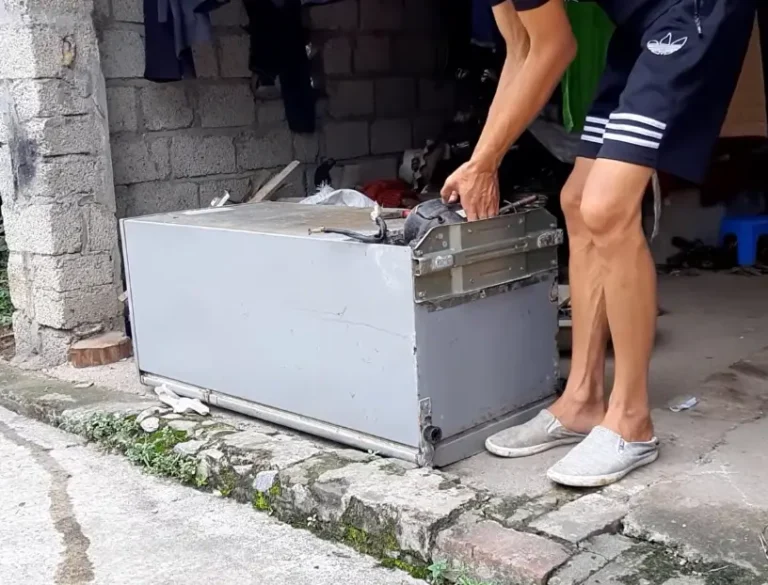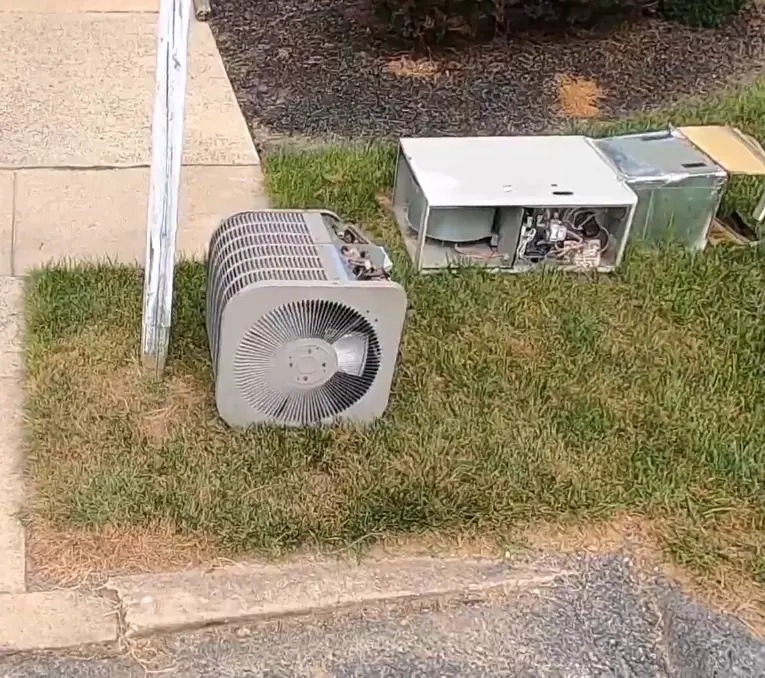

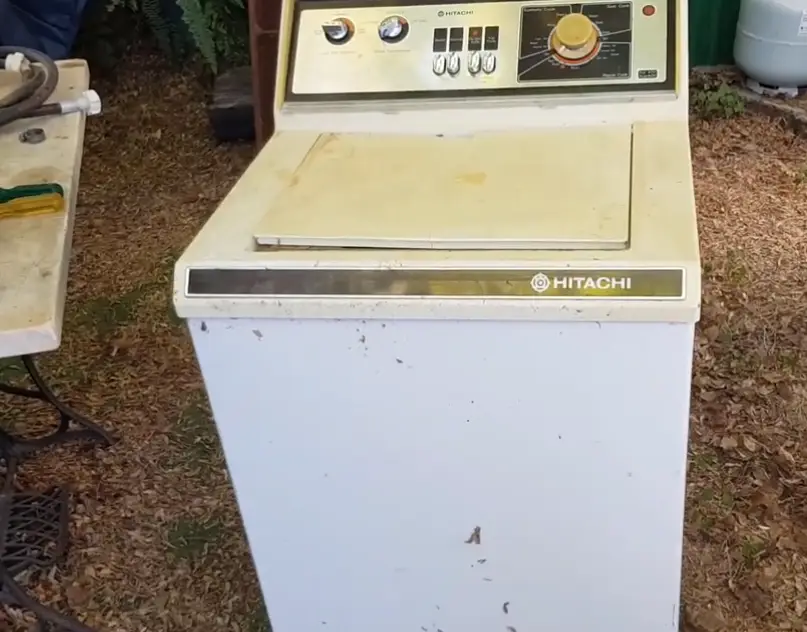
Here is something that catches people off guard at the worst possible moment. You rent a dumpster for a kitchen renovation in West Asheville. The contractor tears out the old refrigerator and drops it in the container with everything else. The dumpster company calls you that afternoon and says the fridge has to come out before they can haul the load. Now you have a 240-pound refrigerator sitting on your driveway, a dumpster you are still paying for, and a contractor who has moved on to the next job.
This happens more than once a week in Buncombe County. The rules around appliances and dumpsters in North Carolina are stricter than most people realize, and they are not always explained clearly when you book a container.
This guide gives you the full picture before that phone call happens to you. It covers what NC law actually says, which specific appliances dumpster companies in Asheville will and will not accept, why the rules exist, and what your real options are for the appliances that cannot go in the bin. If you are currently figuring out what to do with an old appliance, the appliance removal page covers the pickup process in detail.
The Law That Changes Everything: NC General Statute 130A-309.80
Most people know that hazardous chemicals cannot go in a dumpster. Fewer people know that North Carolina has a specific state law that bans the disposal of major appliances in landfills entirely.
NC General Statute 130A-309.80 prohibits the landfill disposal of large appliances. The City of Asheville’s official sanitation page confirms this directly: “North Carolina State Law prohibits the dumping of appliances in a landfill.” This is not a local ordinance or a dumpster company policy. It is state law, and it applies to every property owner, contractor, and hauler operating in North Carolina.
The reason the law exists comes down to refrigerants. Appliances that cool, which includes refrigerators, freezers, window air conditioners, and dehumidifiers, contain CFC refrigerant gases. These gases destroy the ozone layer when released into the atmosphere. Federal law under the Clean Air Act requires that refrigerants be recovered by a certified technician before any cooling appliance is dismantled, crushed, or disposed of.
Here is what that means in practical terms. A refrigerator cannot be thrown in a dumpster in Asheville. Not because the dumpster company made up a rule. Because the refrigerant has not been legally removed yet, and crushing the appliance in a landfill compactor would release those gases. Every dumpster company hauling to the Buncombe County Landfill at 85 Panther Branch Road in Alexander knows this, and they will pull the appliance from your load rather than face the fine.
Jaiden Warner, who runs Asheville Junk Removal from 55 Shiloh Road, has seen this scenario play out dozens of times on job sites across Buncombe County. “The call I get most often is from someone who already has a dumpster and just realized the fridge or the AC unit cannot go in it. By that point they are already paying for two disposal solutions when they needed one.”
The Complete Appliance-by-Dumpster Chart for Asheville
This chart is the answer most people need and most guides bury under paragraphs of caveats. Here is the direct answer for each common appliance.
Refrigerators and freezers: No. Cannot go in a dumpster in Asheville under any circumstances without prior refrigerant recovery by a licensed HVAC technician. This is required by both NC General Statute 130A-309.80 and the federal Clean Air Act.
Window air conditioners and wall units: No. Same rule as refrigerators. Refrigerant must be recovered first by a certified technician.
Dehumidifiers: No. Contain refrigerant. Same rule applies.
Washers and dryers: Yes, with conditions. Washing machines must have all water drained from the drum. Dryers are generally accepted without conditions. Neither contains refrigerant, so the main restriction is weight rather than regulation.
Stoves, ovens, and ranges: Yes. Gas ranges must have the gas supply line disconnected by a licensed plumber or gas technician before removal. Once disconnected, the range itself can go in a dumpster. Electric ranges have no additional preparation requirement.
Dishwashers: Yes. The water supply must be shut off and the drain hose disconnected before removal. The appliance itself is accepted without restriction.
Microwaves: Yes, including over-the-range units. No special handling required.
Water heaters: This one is more complicated than most guides admit. Standard water heaters can technically go in a dumpster, but most Asheville dumpster companies will reject them because the tank holds gases after use and presents a pressure risk when compacted. In practice, treating the water heater like a regulated appliance and routing it through a metal recycler or appliance removal service is the safer move. The dumpster rental page covers weight and material restrictions in more detail.
Trash compactors: Most dumpster companies in Asheville will not accept them because the heavy motor and compressed components make weight and processing difficult. Call the specific company before assuming.
Garbage disposals: Yes. Small and straightforward, no restrictions.
Heat pumps and central AC units: No. These are cooling appliances and contain refrigerant under the same federal and state requirements as refrigerators.
Why the Refrigerant Rule Is More Complicated Than It Sounds
Here is the part of this topic that most guides skip over, probably because it requires knowing something specific about HVAC systems that most writers do not.
When a refrigerant-containing appliance like a refrigerator is manufactured, the refrigerant is contained in a sealed pressurized system. When the appliance is disposed of in a landfill compactor, that sealed system gets crushed. The refrigerant releases into the atmosphere at the point of compaction.
The CFC refrigerants used in older appliances, specifically R-12 and R-22, are among the most ozone-depleting substances ever produced. One pound of R-22 has a global warming potential 1,810 times greater than one pound of carbon dioxide, according to the EPA. More recent appliances use R-134a and R-410A, which are less ozone-depleting but still regulated under federal law.
The refrigerant recovery process involves a certified HVAC technician connecting a recovery machine to the appliance’s refrigerant circuit and pulling the refrigerant into a recovery cylinder. The technician must be EPA Section 608 certified to legally handle refrigerants. This is not something a homeowner can do, and it is not something a general contractor includes in a kitchen renovation quote.
Cost of refrigerant recovery from a refrigerator by a certified technician in Asheville in mid-2026: typically $75 to $150. That is the cost of doing it legally.
This is why appliance removal services exist as a separate category from dumpster rental. Removing a refrigerator correctly is a multi-step process that involves certified refrigerant handling, not just lifting and hauling.
What Happens If You Put a Prohibited Appliance in the Dumpster Anyway
This question comes up in Reddit threads and Nextdoor posts in Asheville more than you would expect. The honest answer is: sometimes nothing happens immediately, and sometimes it creates a serious problem.
The scenarios where it catches up with you are these.
The dumpster company driver spots the appliance when picking up. This is the most common outcome. Dumpster drivers in Asheville are trained to check loads before hauling. A refrigerator visible in the bin when the truck arrives will result in either a delay while you arrange removal or an additional charge for the company to remove it and route it separately. Carolina Dumpster Service, All-In Dumpster Rentals, and Valley Waste are all specific about this policy in Asheville.
The load gets rejected at the Buncombe County Landfill. If the appliance makes it into the truck, the landfill staff at 85 Panther Branch Road may reject the load or pull the item at the gate. The hauler passes that cost back to you as a contamination fee.
The EPA violation. This is the worst-case scenario and it is rare for individual homeowners, but it has happened. Contractors who repeatedly dispose of refrigerant-containing appliances without recovery have faced EPA enforcement actions. The fine structure under the Clean Air Act Section 608 goes up to $44,539 per day per violation as of 2024.
The NC Electronics Law That Nobody Mentions in Appliance Guides
Here is a gap that almost every guide on this topic misses, including most of the competitor pages ranking for this keyword.
While the refrigerant rule covers the appliances most people think about, there is a second NC law that covers a category of devices most people do not think of as appliances: electronics.
NC General Statutes 130A-309.130 through 130A-309.142 ban the disposal of televisions, computers, monitors, printers, and peripheral equipment in NC landfills. This means those items cannot go in a dumpster either, for the same reason the fridge cannot go in: the dumpster eventually goes to a landfill, and that landfill is operating under NC law.
The practical implication: when you are loading a dumpster for a West Asheville bungalow cleanout or a Kenilworth attic clear-out, the TV in the back bedroom and the old desktop computer cannot go in the bin any more than the refrigerator can. The electronics waste removal page covers what happens to these items in detail, including the certified e-waste facilities in Asheville that handle them correctly.
The City of Asheville Program Most Homeowners Have Never Heard Of
Here is something worth knowing before you book any disposal service for your appliance.
The City of Asheville collects appliances, referred to as white goods, through its sanitation program. As of July 2026, the fee is $10 per item for appliances including stoves, ovens, refrigerators, freezers, dishwashers, washers, dryers, air conditioners, trash compactors, and water heaters. You schedule through The Asheville App or by calling (828) 251-1122, and the fee appears on your utility bill.
This program is not same-day. It runs on a scheduled basis and there is typically a wait. But if you have a single appliance and no deadline pressure, it is a real option at $10 per item. The city handles the refrigerant recovery correctly for cooling appliances.
The limitation: it does not handle electronics, construction debris, or any of the other items that accumulate during a renovation. For mixed loads, a full-service pickup makes more sense than combining the city program with a dumpster.
Appliance Disposal in Asheville: Your Actual Options
Now that you know what cannot go in the bin, here are the legitimate paths forward for each appliance type.
For refrigerators and cooling appliances, you have four options.
Option one: The City of Asheville white goods pickup at $10 per item. Works for non-urgent single appliances. Call (828) 251-1122.
Option two: The retailer that sells you the replacement appliance. Lowe’s on Tunnel Road and Best Buy on Brevard Road both offer haul-away programs. Conditions apply and the service is often curbside only.
Option three: Schedule refrigerant recovery through a licensed Asheville HVAC contractor first, then include the drained appliance in your dumpster. This costs $75 to $150 for the recovery service plus your normal dumpster costs.
Option four: Use a full-service appliance removal company that handles refrigerant recovery as part of the job. Asheville Junk Removal handles appliance pickup including refrigerant-compliant cooling appliances. One call, one invoice, one trip.
For washers and dryers, options are simpler. Most dumpster rentals in Asheville accept them. Scrap metal buyers in Buncombe County will sometimes take them for free because the steel has recycling value. The bulk and large waste removal page has detail on how mixed loads including washers and dryers are priced.
For electronics, the Buncombe County Landfill at 85 Panther Branch Road accepts most household electronics at no charge from residents. Scrap Circuit offers free drop-off at 5 Miller Road South in Asheville through Biltmore Computers, open Monday through Friday 10 a.m. to 4 p.m. Asheville GreenWorks runs Hard 2 Recycle events four times per year at A.C. Reynolds High School.
For stoves and electric ranges, most Asheville dumpster companies accept them with no restriction beyond disconnection. Include them in your normal load.
What to Ask Before You Rent a Dumpster in Asheville
Most dumpster companies in Asheville will tell you their prohibited item list when you call. But the specifics vary between companies and the gaps between what they say and what actually gets caught at the landfill gate can be expensive.
These four questions protect you before you sign anything.
Do you accept washers and dryers? Some companies in Asheville do, some add a per-item surcharge. Know the answer before you start loading.
What happens if I accidentally include a prohibited item? Ask about the contamination fee structure and the process for handling rejected loads. Carolina Dumpster Service and All-In Dumpster Rentals both publish this clearly on their websites. Companies that cannot answer this question do not have a clear policy.
Do you accept water heaters? The answer varies by company in Asheville. Worth confirming directly rather than assuming.
What is the weight limit on your 15 or 20-yard container? Appliances are heavy. A standard washer and dryer pair weighs roughly 200 to 300 pounds. A full dumpster of appliances and renovation debris can approach weight limits faster than a load of lighter construction material.
The Honest Answer About Dumpsters vs. Appliance Removal Services
Here is the opinion that most guides in this category will not give you.
For mixed renovation loads where appliances are a minor component, a dumpster makes sense. For jobs where appliances are the primary thing being removed, a full-service pickup is almost always more practical and often comparable in price once you account for the refrigerant recovery cost, the per-item appliance surcharges some dumpster companies charge, and the time spent managing what goes in and what cannot.
The situation where a dumpster is clearly the right call: a full kitchen gut where you have 15 to 20 cubic yards of cabinetry, flooring, and demolition debris, and the refrigerator is being handled by the new appliance retailer. The dumpster handles the bulk, the retailer handles the fridge.
The situation where appliance removal service is clearly the right call: you have a refrigerator, a washer, a dryer, and maybe a dishwasher to clear and nothing else. One truck visit from a certified removal service handles the refrigerant recovery and the hauling in a single trip for roughly what you would pay to rent a dumpster plus the separate refrigerant recovery cost anyway.
The situation where you need both: a full estate cleanout in a Montford Victorian where decades of appliances, electronics, and general household accumulation need to go at the same time. In that scenario, a dumpster handles the general volume while a service handles the regulated items separately. The estate cleanout page covers how that coordination typically works in practice.
Two Common Scenarios, Two Completely Different Right Answers
Scenario one: You live in a Kenilworth bungalow and you are gutting the kitchen. The contractor is removing old cabinets, tile flooring, and a double oven. The old refrigerator is going to be replaced by the new appliance retailer who will haul it away.
Right answer: A 15-yard dumpster from Carolina Dumpster Service or All-In Dumpster Rentals handles the cabinets, tile, and construction debris without any appliance complications. The fridge is the retailer’s problem. Budget $295 to $375 for the bin.
Scenario two: You are clearing out a parent’s home in West Asheville before listing it for sale. The house has a 1998 refrigerator, a washer and dryer, a dishwasher, a stove, and three decades of general accumulation in the basement and attic.
Right answer: A full-service junk removal appointment from Asheville Junk Removal handles the refrigerant recovery on the fridge, routes the washer and dryer to a metal recycler, disconnects and removes the dishwasher and stove, and clears the basement and attic accumulation in one visit. For the volume of the estate, a dumpster could also work, but you would still need separate handling for the fridge, which adds cost and coordination. The full-service route often wins on total time and price in this scenario.
The Bottom Line on Appliances and Dumpsters in Asheville
North Carolina law bans appliances from landfills. Refrigerators, freezers, air conditioners, and dehumidifiers have the additional requirement of certified refrigerant recovery before any disposal method, including dumpsters. Washers, dryers, stoves, and dishwashers can generally go in an Asheville dumpster with the appropriate disconnection, though policies vary by company.
The fastest way to avoid the “fridge in the dumpster” problem is to sort your appliances from your renovation debris before you book anything, know which items fall under the NC appliance ban, and make a separate plan for anything that contains refrigerant.
For garbage pickup in Asheville that handles the sorting for you, Asheville Junk Removal operates Monday through Saturday 8 a.m. to 6 p.m. from 55 Shiloh Road. Call (877) 460-9961 or text photos of your appliances for a firm quote. Most quotes are confirmed in under five minutes and same-day pickup is available for calls placed before late morning.
Have you run into the appliance dumpster situation during a renovation? The specific scenario matters because the right answer changes depending on what else is in the load. Drop the details in the comments and we can point you in the right direction.